










Legal problems often begin as ordinary life events. A car accident, unexpected debt, a disagreement with a landlord, a family conflict, or a traffic-related charge can quickly become more serious when deadlines, financial consequences, or formal notices enter the picture.
One of the biggest challenges is knowing when a problem has reached the point where professional guidance may be useful. Some issues can be handled through communication, paperwork, or negotiation. Others can become much harder to manage if too much time passes or important evidence is lost.
A practical first step is to get organized. Gather documents, save messages, write down dates, and create a simple timeline of what happened. This can make it much easier to explain the situation clearly and understand what information may matter.
It is also important to recognize that different legal issues require different kinds of experience. Someone who frequently handles financial matters may not regularly work on criminal or family disputes, and the same is true in reverse.
The sections below look at several common legal problems, what information is useful to preserve, and when it may make sense to seek professional guidance before the situation becomes more difficult.
Document an Accident Before Important Evidence Disappears
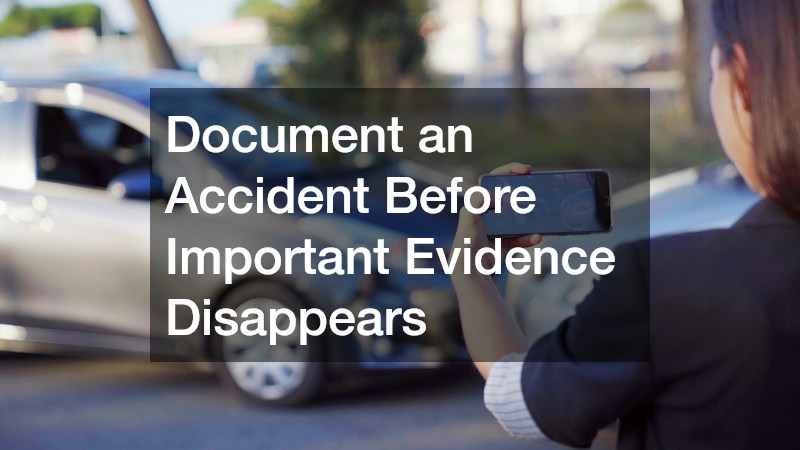
The hours and days after an accident can be important because memories fade, physical evidence can change, and important records may become harder to obtain.
If you are physically able, start by documenting what happened. Take photographs of the scene, visible injuries, property damage, road conditions, and anything else that may help explain the circumstances.
Other useful information may include:
- Names and contact information for witnesses
- Insurance information
- Police or incident report numbers
- Medical records
- Repair estimates
- Photographs of damaged property
- Written communication with insurers
- A record of missed work
Medical attention is also important. Some auto accident injuries may be obvious immediately, while others may become more noticeable later. Pain, stiffness, headaches, or reduced mobility may not fully develop until hours or days after the event.
Keep track of appointments, symptoms, prescriptions, and how the injury affects normal activities. A simple written log can help establish a timeline.
Accident and injury lawyers may become relevant when injuries are significant, liability is disputed, several parties are involved, or an insurance claim becomes difficult to resolve.
It can be useful to ask questions such as:
- What evidence should I preserve?
- Are there deadlines I need to know about?
- Should I communicate directly with an insurer?
- What documents are most important?
- What expenses should I track?
Avoid assuming that someone else’s accident can tell you what your own case may be worth. Different injuries, insurance policies, medical costs, evidence, and factual circumstances can produce very different outcomes.
It is also helpful to keep communication organized. Save emails, letters, claim numbers, and names of people you speak with. If an insurer requests information, keep a copy of what you provide.
The more complete your records are, the easier it is to understand what happened and how the consequences have developed over time.
Seek Guidance Early When Injury or Criminal Issues Escalate
Some legal issues develop gradually, while others create immediate pressure.
A person may seek a personal injury legal service after a fall, unsafe property incident, defective product, workplace-related accident, or another event involving an alleged failure to exercise reasonable care.
In these situations, documentation matters just as much as it does after a vehicle accident.
Useful records can include:
- Photographs
- Medical bills
- Treatment summaries
- Incident reports
- Witness contact information
- Insurance correspondence
- Employment records showing missed work
- Receipts for related expenses
Try to preserve information as soon as possible. Conditions at an accident site can change, video may be overwritten, and witnesses may become difficult to locate.
Criminal or traffic-related charges can involve a different set of concerns.
Someone facing an impaired-driving allegation may decide to contact a drunk driving attorney after an arrest, citation, testing procedure, or court notice.
These cases may involve questions about:
- The traffic stop
- Testing procedures
- Available evidence
- Court dates
- License-related consequences
- Statements made during the incident
Keep every document provided by law enforcement or the court. Do not discard paperwork because it appears repetitive or unimportant.
It may also help to write down your memory of events while details are still fresh. Include times, locations, conversations, testing, and anything else you remember.
Avoid comparing your situation too closely with someone else’s. Two cases that sound similar may involve different evidence, procedures, prior histories, or factual circumstances.
Time is especially important when a case involves formal notices or court dates. Waiting until the last moment can leave less time to review documents and understand the next steps.
The goal of early guidance is not simply to react quickly. It is to get enough information to make informed decisions before important deadlines or opportunities pass.
Address Financial Problems Before They Become Harder to Manage

Financial problems often build gradually. A missed payment turns into several, collection calls begin, and eventually lawsuits or other formal actions may follow.
The earlier you evaluate the full picture, the more options you may be able to consider.
Start by creating a realistic inventory of:
- Monthly income
- Basic living expenses
- Credit card balances
- Personal loans
- Mortgage or rent obligations
- Auto loans
- Tax debts
- Business debts
- Major assets
A bankruptcy attorney may help explain what formal debt-relief options exist and what consequences may come with them. Consulting someone does not necessarily mean a filing will follow. The purpose of a consultation can simply be to understand available choices.
Bring accurate records whenever possible. Pay stubs, account statements, tax documents, loan balances, collection notices, and court papers can make the discussion more productive.
Questions to ask may include:
- What options should I consider?
- Which debts may be affected?
- What assets could be involved?
- What information do I still need to gather?
- What alternatives may exist?
- What costs should I expect?
Business owners may face additional complications because the financial problem can involve employees, leases, contracts, suppliers, secured debt, and continuing operations.
A chapter 11 bankruptcy attorney may become relevant when a business or more complicated financial situation involves reorganization rather than a straightforward liquidation process.
Business financial problems may involve:
- Payroll obligations
- Commercial leases
- Equipment financing
- Vendor debts
- Secured loans
- Tax obligations
- Customer contracts
Do not wait until records become disorganized or several legal actions are underway before gathering financial information.
Even if you ultimately decide not to pursue a formal debt process, understanding the full financial picture can help you evaluate repayment, negotiation, restructuring, or other possible approaches.
Get Organized Before Family or Housing Conflicts Intensify
Family and housing disputes often become difficult because they combine legal issues with strong emotions.
When communication begins to break down, written records can become especially valuable.
Someone may consider speaking with a local family attorney during a divorce, separation, parenting disagreement, support dispute, or conflict involving property.
Before a consultation, collect information such as:
- Existing court orders
- Financial statements
- Parenting schedules
- Relevant emails and messages
- Property records
- Income documentation
- Prior agreements
Try to keep communication factual. Angry or impulsive messages may make an already difficult situation harder to manage.
It can also help to create a timeline showing when major events occurred. This is especially useful when a dispute has developed over several months or years.
Housing conflicts require similar organization.
Eviction attorneys may become involved when property owners are dealing with unpaid rent, alleged lease violations, damage, holdover occupancy, or questions about notices and procedures.
Landlords and tenants should both preserve records such as:
- Lease agreements
- Rent payment history
- Written notices
- Maintenance requests
- Photographs
- Inspection reports
- Emails and text messages
Avoid relying on memory when a written record is available.
If you receive formal paperwork, read it carefully and identify any dates or required responses. Housing disputes can move quickly once official notices or court documents are involved.
Creating a simple timeline can also help:
- When did the issue begin?
- What notices were sent or received?
- What payments were made?
- What repairs or complaints were documented?
- What responses were provided?
- What happened next?
Early guidance may help clarify whether the next step should involve negotiation, compliance, documentation, filing, or another response.
The goal is to understand the issue before communication breaks down completely or a manageable dispute becomes more difficult to resolve.
Choose Legal Help Based on Experience and Fit

Finding legal help is not only about finding someone nearby. The more important question is whether that person regularly handles the type of problem you are facing.
A local lawyer may offer useful familiarity with nearby courts, regional procedures, or local agencies, but location should be considered alongside experience, communication style, and availability.
Before choosing someone, compare several factors:
- Relevant experience
- Fee structure
- Responsiveness
- Availability
- Communication style
- Who will actually work on the matter
- Familiarity with the type of dispute involved
For example, someone dealing with a personal injury matter should ask how frequently the professional handles similar claims rather than assuming all legal practices approach injury cases the same way.
An initial consultation is a good time to ask specific questions.
Consider asking:
- Have you handled situations like mine?
- What documents should I bring?
- Are there immediate deadlines?
- What are the likely next steps?
- How will we communicate?
- What are the fees?
- Are there additional expenses?
Understand how billing works before signing an agreement.
Common fee arrangements may include:
- Hourly billing
- Flat fees
- Retainers
- Contingency arrangements
- Additional case expenses
Make sure you understand whether filing fees, expert costs, records, travel, or other expenses are separate from professional fees.
You should also be cautious about guarantees. A responsible professional can discuss experience, possibilities, and risks, but outcomes often depend on facts, evidence, procedure, and decisions made by other parties.
When time allows, compare more than one option. The person with the highest profile or lowest price is not automatically the right fit.
Good communication is especially important. You should understand who will answer questions, how often updates will be provided, and who will actually handle the matter after the initial meeting.
A strong working relationship usually combines relevant experience with clear expectations and communication that makes you feel informed rather than confused.
Know When It Is Time to Ask for Help

Many legal problems are easier to understand when they are addressed early instead of after deadlines have passed or disputes have escalated.
When something begins to feel serious, start by getting organized. Gather documents, preserve written communication, record important dates, and identify any official notices you have received.
A simple checklist can help:
- Collect relevant paperwork.
- Create a timeline.
- Save emails and messages.
- Identify deadlines.
- Write down your questions.
- Avoid destroying or altering records.
You do not need to assume that every problem requires formal representation. In some situations, an initial consultation may simply help you understand your rights, obligations, and available options. Even a brief conversation can help clarify whether immediate action is necessary, what documents you should preserve, and whether there are deadlines that could affect your situation.
At the same time, matters involving major financial consequences, criminal allegations, housing, family disputes, or significant injuries deserve careful attention. Problems in these areas can develop quickly, and waiting too long may reduce the options available. Court papers, government notices, insurance correspondence, or demands from another party should be reviewed promptly rather than set aside for later.
Preparation can also make any consultation more productive. Bring relevant documents, create a timeline of important events, and write down your most important questions beforehand. Having information organized allows more time to focus on what the situation means and what steps may be appropriate.
Be honest when discussing the facts, including details that may be uncomfortable or unfavorable. Accurate guidance depends on accurate information. Leaving out an important conversation, document, payment, prior event, or other detail can make it harder to evaluate the situation correctly. It is usually better to provide the complete picture from the beginning.
You should also make sure you understand what happens after the initial conversation. Ask whether additional information is needed, what deadlines are approaching, what responsibilities you will have, and how future communication will work. Clear expectations can reduce uncertainty and make an already stressful situation easier to manage.
The goal is not to react to every legal problem with fear. It is to recognize when the issue has become serious enough that additional guidance could help you make better decisions. Taking action early does not necessarily mean starting a lawsuit or entering a lengthy legal process. Sometimes it simply means learning where you stand before making an important decision.
By acting early, staying organized, preserving useful information, and asking the right questions, you can approach difficult legal situations with more clarity and a better understanding of what to do next. The sooner you understand the problem and the choices available to you, the easier it can be to make thoughtful decisions instead of reacting under pressure.